
anatomy of a wedding dress: a beginner’s guide to bridal terminology
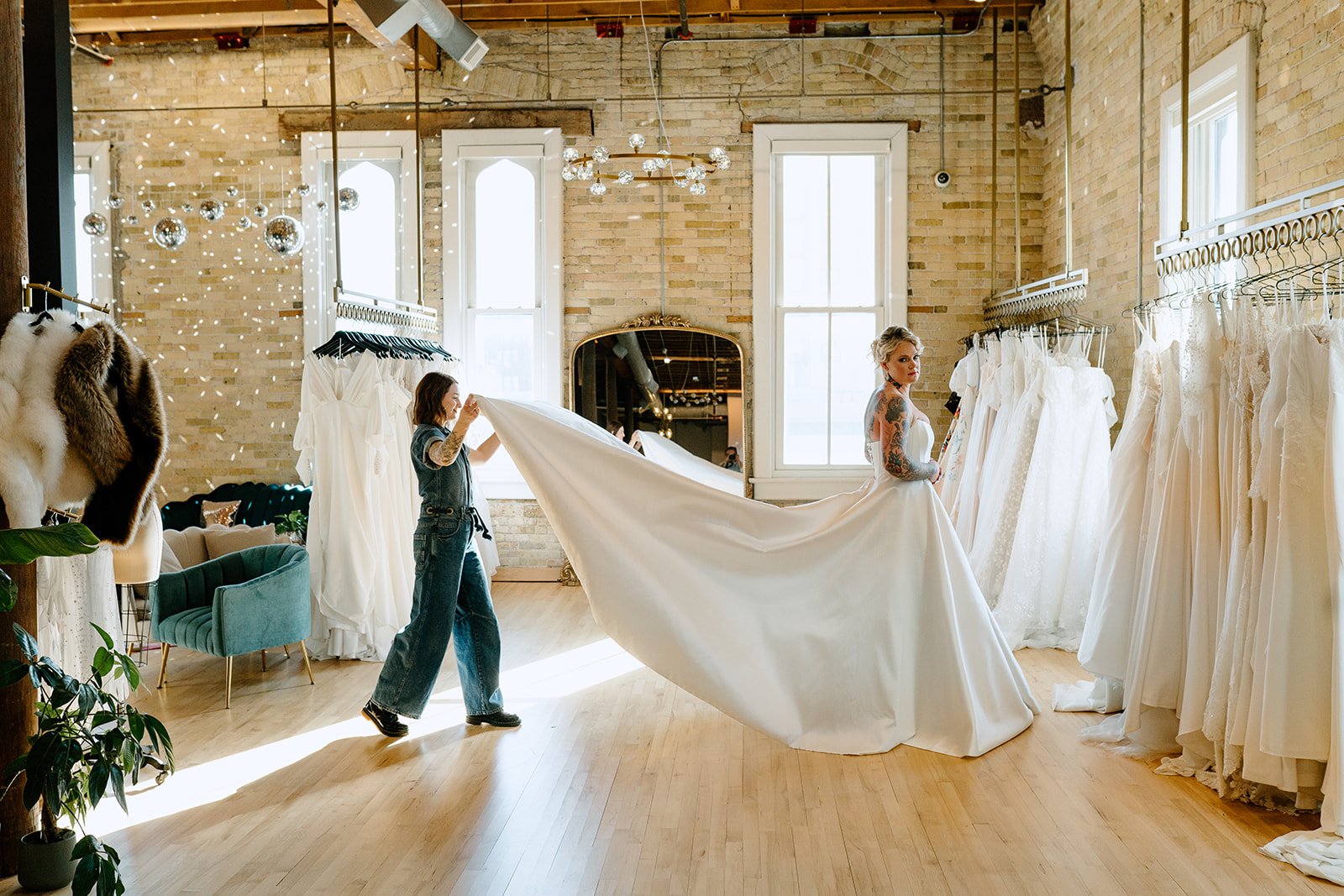
ever sat in a bridal appointment and thought, “i have absolutely no idea what that means”?
bridal has a language of its own. mikado. basque waist. boning. crinoline. corset back. dropped waist. and suddenly you’re expected to know the difference between all of them while standing in a dressing room in your underwear.
don’t worry. we’ve got you.
you absolutely do not need to become fluent in bridal before you start wedding dress shopping. but knowing a few of the terms you’re likely to hear can make it a little easier to explain what you like, understand what your stylist is talking about, and figure out which details make a gown feel like you.
here’s your crash course in the anatomy of a wedding dress.
the bodice
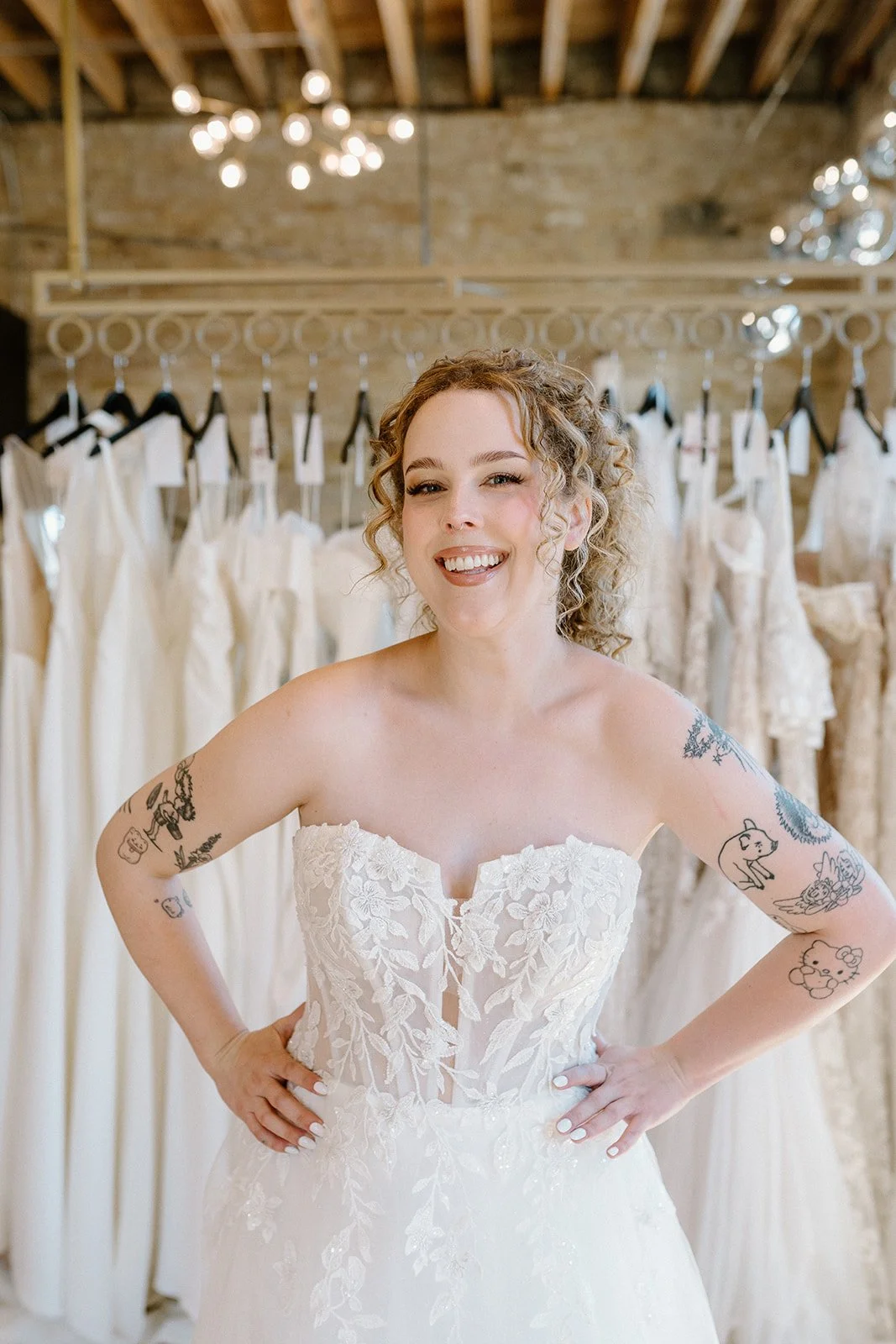
the bodice is the top portion of the gown, from the neckline to the waist. it’s where you’ll find a lot of the construction and detailing that gives a gown its shape. whether that’s through boning, corsetry, draping, lace, beading, cups, seams or something else. two gowns can have a very similar skirt but feel completely different because of what’s happening in the bodice.
the silhouette
the silhouette is the overall shape of the gown. essentially, how the dress falls on your body. some of the most common silhouettes you’ll hear about are:
a-line: fitted through the bodice and gradually flares out from the waist.
ballgown: fitted through the bodice with a full, dramatic skirt.
fit + flare: fitted through the bodice and hips before flaring out lower on the skirt.
mermaid: fitted through the bodice and hips, then dramatically flares around or below the knee.
sheath: a straighter, more streamlined silhouette that follows the body without a dramatic flare.
and yes, you can absolutely love more than one.
the waistline
the waistline is where the bodice meets the skirt, but not every gown hits at the same place. you might hear your stylist talk about a natural waist, basque waist, or dropped waist. a natural waist generally sits where your natural waist does. a basque waist dips down into a soft point, while a dropped waist extends lower onto the hips. these might sound like tiny differences, but they can completely change the proportions and overall feel of a gown.
the fabric
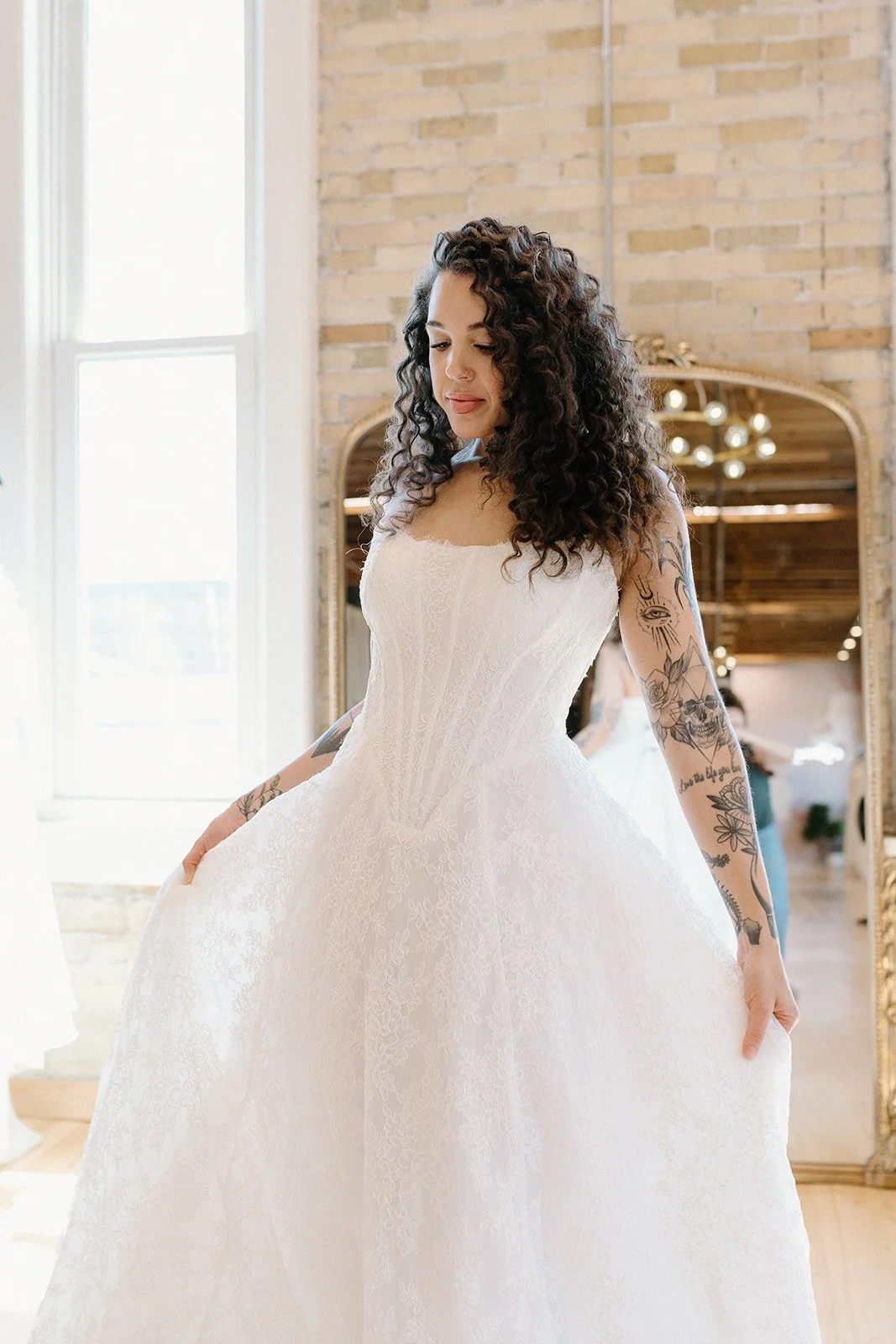
this is where things can get a little overwhelming. mikado, crepe, satin, tulle, organza, chiffon, lace… these are all different fabrics, and each has its own weight, texture, structure + movement. a structured mikado ballgown is going to feel very different from a soft tulle ballgown, even if the silhouette is nearly identical. this is why we always encourage brides to actually touch the gowns during their appointment. sometimes you don't know what you like until you feel it.
boning
boning consists of thin, rigid strips built into the bodice to provide structure + support. it helps create that sculpted, held-in feeling you get from a well-constructed gown and can be especially important in corseted or strapless styles. boning isn't about changing your body. it's about giving the gown the structure it needs to support you.
the crinoline
want volume? meet your new best friend. crinoline is a stiff netting or petticoat used underneath a gown to give the skirt structure + shape. some gowns have crinoline built directly into the skirt, while others allow you to add or remove a petticoat depending on how much volume you want. it’s one of those things you might not notice when you look at a gown on the hanger, but you’ll definitely notice it once you put it on.
the corset back
a corset back uses lacing to adjust the fit of the bodice. besides being a beautiful design detail, it gives you some flexibility through the waist and can help create that structured, sculpted look. and while we're here: a corset back does not mean you can skip alterations. even gowns with adjustable backs will typically need professional alterations to achieve the best possible fit.
the train
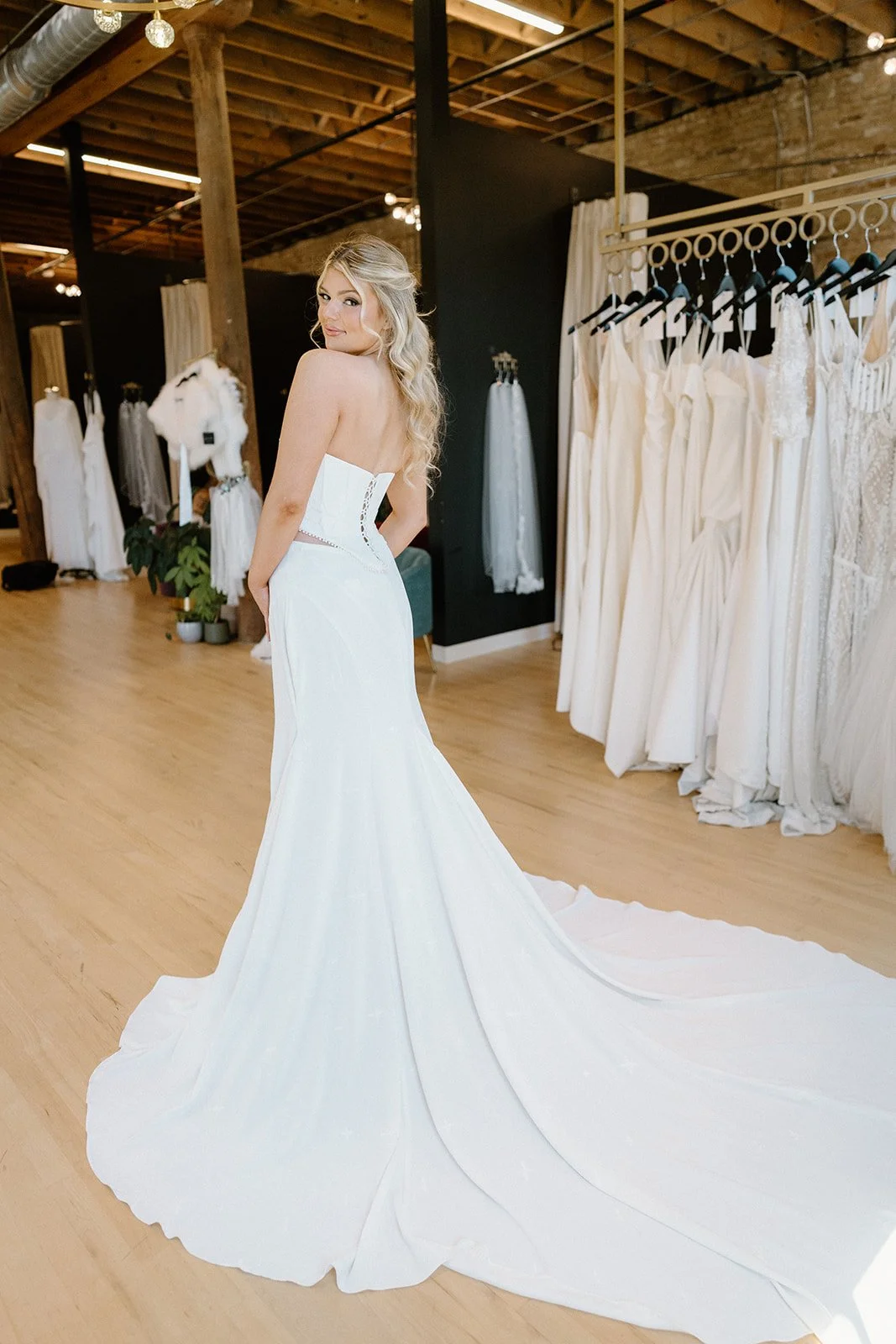
the train is the extra length of fabric that extends behind the gown. trains can be subtle or seriously dramatic, depending on the gown. some barely extend past your feet, while others are designed to make an entrance before you even do. eventually, your alterations professional will likely add a bustle, which gathers or lifts the train so you can actually dance, walk, sit, and generally enjoy your reception without dragging your gown behind you.
the neckline
the neckline is the shape of the gown around your bust. some common examples include strapless, sweetheart, square, scoop, v-neck, halter, off-the-shoulder + bateau. necklines can completely change the personality of a gown. a square neckline can feel structured and modern, while a sweetheart can feel softer and more romantic. there’s no “best” neckline. it’s about what makes you feel good.
the sleeves + straps
sleeves and straps aren't just functional, they can completely transform a gown. you might see everything from delicate spaghetti straps to dramatic off-the-shoulder sleeves, detachable sleeves, long fitted sleeves, draped sleeves, cap sleeves + more. and if you fall in love with a gown but wish it had a little something extra, ask your stylist about customization. depending on the designer, some gowns can be ordered with different sleeves, straps, or other details.
the details
then there are all the little things that make a gown feel like your gown. buttons. bows. beading. embroidery. lace. slits. draping. overskirts. pockets. the list goes on. these details might seem small individually, but they can completely change the way a gown feels.
so… do you actually need to know all of this before your appointment? absolutely not.
in fact, we’d rather you come in with an open mind than a perfectly memorized bridal vocabulary list. you can tell your stylist:
“i don't know what this is called, but i love it.”
or:
“i don't know why, but i hate this.”
both are incredibly helpful. your stylist is there to translate what you’re seeing, pull gowns based on what you’re gravitating toward, and introduce you to silhouettes and details you might not have considered.
wedding dress shopping isn't a vocabulary test. you don't have to know the difference between mikado and satin to know that you love the way one feels. you don't have to know what a basque waist is to know that you love the way it looks on you. and you definitely don't need to know exactly what you're looking for before you start.
you just need to be curious enough to try. we’ll take care of the rest.